
A new chapter in community giving.
For much of its history, the Foundation did its work from inside a bank. Harold “Bud” Hershberger knew that arrangement well. He was a Northern Central Bank employee when he became the Foundation’s secretary in 1962. He later joined its board and helped keep its daily work going through the transition to independence.
In 1989, Pennsylvania approved the Foundation’s incorporation as an independent nonprofit. With it came a new name, the Williamsport-Lycoming Foundation. The practical work of separating from the bank took longer. The Foundation opened its first independent office in 1990, and the bank continued to handle much of its financial work for several more years. The separation was complete in 2000.
Even while a small staff was finding its footing, the Foundation made a commitment that people downtown could see. In 1990, it awarded $2 million toward restoring the movie theater that would become the Community Arts Center.
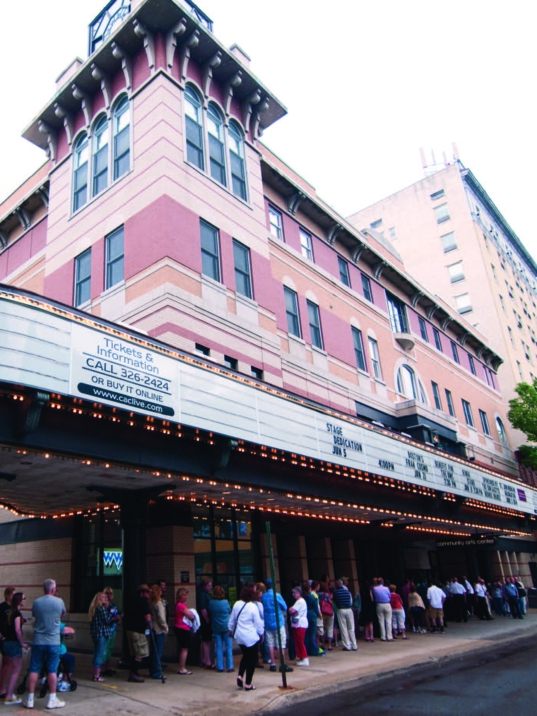
When the lights came back on
In 1990, the Foundation made its largest grant yet: $2 million to help restore the Capitol Theatre in downtown Williamsport. Three years later, the doors reopened as the Community Arts Center. Neighbors who remembered going there for movies could return for a live performance and bring someone seeing the stage for the first time.
By 1996, the Foundation managed 76 funds. The next year, Kimberley Pittman-Schulz moved from California to become its first president. Among the changes she introduced was a more personal invitation to give. Many people had understood a gift to the Foundation as something they would leave in a will. She reached out to people who might want to start sooner.

That invitation changed what giving could look like for a donor. People could talk with the Foundation about a cause they cared about, make a gift and see the work unfold in their own lifetimes.